
Choosing the Right Driver for LED Strip Lighting at Home
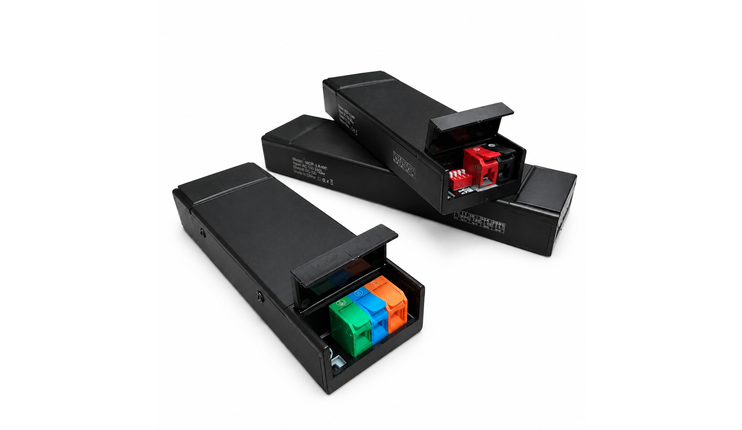
LED strip lighting is widely used in Singapore homes. It works well for coves, cabinets, wardrobes, mirrors and feature lighting. However, homeowners often spend more time choosing the LED strip than the driver powering it. The driver matters too. It supplies power to the LED strip and can affect brightness, stability and long-term reliability. Choosing the right 24V driver for LED strip lighting starts with two decisions. First, choose the right voltage system. Then consider the quality and features of the driver itself.
Why the LED Strip Driver Matters as Much as the LED Strip
12V vs 24V: Why We Prefer 24V for Most Home Installations
Both 12V and 24V LED strips have suitable applications. For most residential installations, however, 24V offers practical advantages.
A comparable 24V system generally handles longer runs with less voltage drop than a 12V system. This helps maintain more consistent brightness along longer LED strip installations. It is particularly useful for living room coves, long cabinets, wardrobes and feature walls.
Maximum strip length still depends on the actual LED strip and its power consumption.
Using One Voltage Reduces Costly Mistakes
Mixing 12V and 24V LED strips throughout one home can create unnecessary confusion. Years after renovation, homeowners may not remember which areas use 12V and which use 24V. Connecting a 12V strip to a 24V driver can damage the LED strip. A 24V strip will not operate correctly from 12V.
Standardising on 24V removes one important compatibility issue. Homeowners and installers still need to check wattage and product compatibility. However, there is one less specification to get wrong.
Future Maintenance Becomes Simpler
LED drivers are electronic products and may eventually require replacement. By then, your original interior designer or electrician may no longer be involved. If different areas use different voltages, every replacement requires additional checking.
Standardising around 24V makes future sourcing and replacement easier. This becomes particularly useful when a home has many concealed LED strip installations.
Driver Quality Can Affect Your LED Strip
A good LED strip still depends on a suitable driver providing stable power. Poor or unstable power can contribute to flickering, buzzing and inconsistent brightness.
Excessive heat can also place unnecessary stress on the driver and LED strip. Over time, electrical and heat stress can contribute to earlier deterioration.
Homeowners should therefore consider the LED strip and driver as one lighting system.
What Makes a Better 24V LED Strip Driver?
Heat Management Matters in Concealed Areas
LED drivers generate heat during normal operation. This deserves more attention when the driver sits inside cabinets, carpentry or other areas with limited airflow.
Conventional drivers commonly use ventilation holes to allow air to circulate around their internal components.
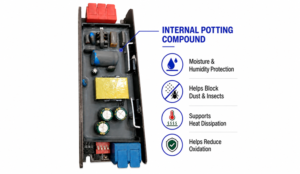
Aspire Lightings’ latest GT-III 24V LED driver takes a different approach. Its internal electronics are surrounded by potting compound that helps transfer heat towards the housing. This feature is useful for drivers installed in concealed areas where natural airflow may be limited.
Potting Compound Adds Protection Around the Electronics
The potting compound does more than help manage heat. It surrounds the internal electronics and helps reduce exposure to humidity, moisture, dust, insects and oxidation. It also helps hold electronic components securely in place. This reduces component movement caused by vibration during transportation and handling.
For homeowners, these features provide added protection for a driver that may remain hidden for years.
False Ceiling Cove Drivers Are Often Left Exposed for Years
In many Singapore homes, contractors place the driver together with the LED strip inside the false ceiling cove. These areas are high up and usually out of sight. Most homeowners rarely clean around the driver. Dust and insects can therefore accumulate over time.
Conventional drivers with ventilation holes leave their internal area more exposed to the surrounding environment. Singapore’s humid climate also means the driver may face prolonged exposure to humid air.
The GT-III has a fully enclosed housing with internal potting compound. This helps protect its electronics from dust, insects, humidity, moisture and oxidation.
For homeowners, it means added protection for a driver that may remain untouched for years.
Singapore Bathrooms Need Extra Consideration
LED strip lighting is also commonly used in Singapore bathrooms. BTO homeowners often use concealed LED strips inside boxed-up ceiling coves. Other popular applications include mirror backlighting and lighting for customised wall niches.
Bathrooms naturally experience more humidity and moisture than many other areas of the home. This makes the construction of the LED driver particularly relevant.
GT-III’s enclosed housing and internal potting compound provide added protection for its internal electronics.
The driver should still be installed in a suitable location away from direct water spray.
Lower Brightness Can Help Reduce Stress on LED Strips
Not every area of a home requires the same LED strip brightness. A living room cove may need stronger light. A display cabinet may look better with a softer glow.
Running an LED strip below maximum output can reduce its power and heat load. This can help reduce stress on the LEDs and potentially extend their working life.
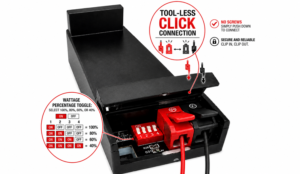
GT-III provides 100%, 80%, 60% and 40% preset output levels using a DIP switch. This allows one suitable LED strip to serve different brightness requirements around the home.
Homeowners do not need to select several strip brightness versions for different locations. The installer can adjust the required brightness directly at the driver. This also reduces the risk of installing a lower-brightness strip where stronger lighting is required.
Tool-Free Connections Make Installation Easier
The quality of the electrical connection also matters. Conventional screw terminals depend on correct wire positioning and tightening. Improper positioning or tightening can result in poor electrical contact. Poor contact may cause flickering, intermittent power and heat build-up at the connection.
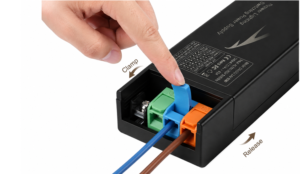
GT-III uses tool-free clip-on terminals instead of conventional screw terminals. They make wiring faster and reduce dependence on manually tightened connections.
Choosing the Right 24V Driver for Your Home
Choose the Driver Capacity to Match Your LED Strip
Using 24V throughout the home does not mean every installation needs the same driver wattage. A short cabinet strip requires less power than a long living room cove.
Start by multiplying the strip’s wattage per metre by its total length. As a practical general guide, allow 20% additional driver capacity rather than sizing exactly to the calculated load.
For example, an 8m strip using 10W per metre requires 80W. Adding 20% gives 96W, making a 100W driver a suitable choice.
GT-III strip light driver is available in 60W, 100W and 200W versions for different lighting requirements.
Plan Driver Access Before Renovation
Think about driver location before the false ceiling and carpentry are completed.
A driver should remain reasonably accessible for future inspection or replacement. Discuss the location with your interior designer or electrician before closing the ceiling or carpentry. This small planning decision can save unnecessary cutting, repair work and inconvenience years later.
Consider the Complete LED Strip System
A well-planned LED strip installation is more than choosing an attractive strip. Consider the voltage, driver capacity, heat management, installation location and future maintenance together.
For many Singapore homes, standardising on 24V can simplify the system and reduce future confusion. A quality 24V driver for LED strip lighting can then provide the power and protection the installation needs.
GT-III adds internal potting protection, heat management, adjustable output and tool-free connections to this approach.
It also comes with a two-year carry-in warranty for added assurance.
Explore the GT-III 24V LED Driver Power Supply to see the available 60W, 100W and 200W options.
FAQ
Can I use one 24V driver for several LED strips?
Yes. Several compatible 24V LED strips can share one driver if their combined power requirement stays within the driver’s suitable capacity. Cable length and wiring layout also matter. Ask your installer to calculate the total load before connecting several LED strips to one power supply.
How do I choose the right wattage driver for my LED strip?
Multiply the LED strip wattage per metre by the total strip length. As a practical guide, allow about 20% extra driver capacity rather than sizing exactly to the calculated load.
For example, an 8m strip using 10W per metre requires 80W. Adding 20% gives 96W, so a 100W driver would be suitable.
Where should I place the LED driver for easier future maintenance?
Install the driver somewhere accessible without major renovation work. Suitable locations may include accessible cabinets, carpentry compartments or planned ceiling access points. Avoid permanently sealing the driver behind finished surfaces. In bathrooms, position it appropriately and away from direct water spray.