
Surface Mounted Cove Light Profile: A Homeowner’s Guide to Coveless Cove Lighting
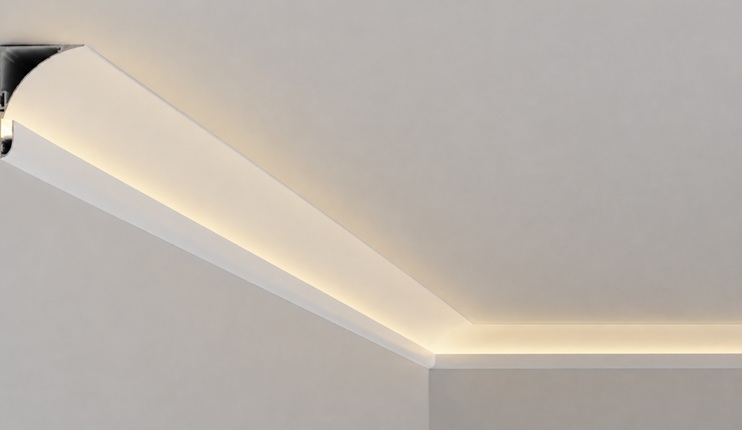
Create Cove Lighting Without a False Ceiling
If you want soft indirect ceiling light without building a bulky false ceiling, a Surface Mounted Cove Light Profile is one of the most practical options to consider.
It gives homeowners a way to create a clean cove-light effect using an aluminium profile installed at the ceiling-wall junction. The LED strip is hidden inside the profile, so what you see is not the strip itself, but a softer reflected glow across the ceiling or wall.
This is why more homeowners are exploring coveless cove lighting during renovation planning. The look is modern. The ceiling feels cleaner. The room gains another lighting layer without relying on a heavy plasterboard cove.
In this guide, we will cover what coveless cove light is, how it compares with traditional false-ceiling cove lighting, the main features and benefits, the common types of aluminium profiles, and what homeowners should plan before deciding to install one.
What Is Coveless Cove Light?
Coveless cove light is indirect lighting that creates the effect of cove lighting without building the usual false-ceiling cove or L-box. Instead of hiding the LED strip inside a plasterboard ledge, the strip is installed inside an aluminium profile fixed along the wall-ceiling junction. The profile blocks direct glare and helps control the direction of light. The result is a softer and more architectural lighting effect.
Homeowners usually choose coveless cove lighting when they want:
- a cleaner ceiling design
- less bulky ceiling treatment
- soft ambient lighting
- a modern and more minimal look
- an alternative to a full false-ceiling cove
In simple terms, coveless cove light is still cove lighting. The difference is how the lighting is built and concealed.
What Does a Surface Mounted Cove Light Profile Do?
A Surface Mounted Cove Light Profile does more than just hold an LED strip. It performs four important functions.
1. It hides the LED strip
The profile conceals the LED strip from direct view. This matters because exposed strip lighting can look harsh or unfinished if you can see the light source directly.
2. It shapes the light effect
The profile helps direct the light upwards, downwards, or at an angle. This changes how the ceiling glow or wall-wash effect will look in the room.
3. It gives the LED strip a proper housing
A good aluminium profile provides a more suitable mounting base than sticking an LED strip directly onto plaster or paint.
4. It creates a cleaner architectural line
Instead of looking like a lighting accessory added afterwards, the profile helps the lighting detail feel integrated into the room design.
Why Homeowners Choose Coveless Cove Lighting
Homeowners usually do not choose this only because it looks trendy. They choose it because it solves practical renovation and design concerns.
Cleaner ceiling design
A traditional cove often creates a visible boxed-out ceiling feature. Some homeowners like that look. Others feel it makes the ceiling too heavy, especially for low ceiling. Coveless cove lighting creates a slimmer detail.
Less dependence on a full false ceiling
If your main goal is simply to create soft perimeter lighting, a full false ceiling may be more than what you actually need.
A surface-mounted profile can achieve the lighting effect with less ceiling build-up.
Softer ambient light
Indirect lighting adds visual comfort. It is useful when you do not want bright direct ceiling light all the time. This is especially helpful in living rooms, bedrooms, dining areas and feature spaces.
Better for modern minimalist interiors
Coveless profiles often suit modern, contemporary and minimalist homes because the lighting line looks neater and less bulky.
Useful for layered lighting design
A home usually feels better when lighting comes from more than one source. Cove lighting adds an ambient layer, which makes the overall lighting plan feel less flat.
False Ceiling Cove Light vs Coveless Cove Light
Many homeowners ask the same question: which is better?
The answer depends on what you want to achieve.
| Consideration | Traditional False Ceiling Cove | Coveless Light without False Ceiling |
|---|---|---|
| Structure | Requires built cove or plasterboard detail | Uses aluminium profile at ceiling-wall junction |
| Ceiling look | More visible ceiling feature | Slimmer and cleaner line |
| Ceiling height | Usually reduces visible ceiling height more | Helps preserve more of the existing ceiling |
| Renovation work | More ceiling construction | Usually less bulky ceiling work |
| Lighting effect | Good for broader architectural cove effects | Good for modern slim cove effects |
| Workmanship focus | Ceiling build and finish | Profile alignment, wiring and finishing |
| Best for | Homes already doing major false-ceiling work | Homes wanting indirect light without a bulky cove |
Neither option is automatically better.
If you are already building a false ceiling for other renovation reasons, a traditional cove may fit naturally into the design.
But if you mainly want indirect ceiling lighting and a cleaner look, a Surface Mounted Cove Light Profile is often the more efficient option to consider first.
Key Features and Benefits Homeowners Should Know
Before choosing a coveless system, homeowners should understand the practical features behind the look.
Aluminium body
Aluminium gives the profile structure and helps provide a proper channel for the LED strip.
Paintable finish
Many profiles come in a white finish that can blend more easily into a light-coloured wall or ceiling.
LED strip compatibility
Profile selection must match the LED strip width and lighting type. This affects installation and final appearance.
Up-light or down-light direction
Some profiles allow different orientations. That means you can choose to bounce light upwards for ambient glow or direct light downwards to highlight a wall surface.
Corner accessories
Inner and outer corner connectors can improve finishing and help maintain cleaner profile transitions.
Easier cleaning than bulky coves
Some open-profile designs reduce heavy dust-trap ledges compared with some conventional cove constructions.
The biggest homeowner benefit is this: you get a premium indirect lighting effect without relying on a bulky false-ceiling build-up.
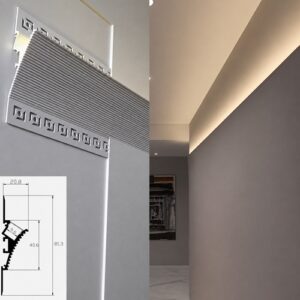
1. Larger Cornice-Style Profile for a Fuller Cove Light Effect
A larger cornice-style profile suits homeowners who want the coveless lighting to form a more noticeable part of the ceiling design. Its larger profile creates a more substantial architectural line than a slim aluminium channel, making it suitable when you want a fuller cove-light appearance without constructing a conventional false-ceiling cove. This style works particularly well for:
- living rooms
- dining areas
- bedrooms
- long perimeter lighting
- larger feature spaces
It is a good option when you want the indirect lighting to have more visual presence rather than almost disappearing into the ceiling. For this type of installation, the Arclux-Double Coveless Light is one option to consider.
2. Flexible Cornice Profile for Upward or Downward Lighting
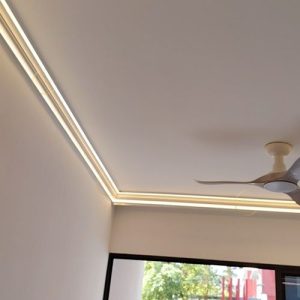
Some coveless cornice profiles provide more flexibility in how the light is directed. Installed facing upwards, the LED light reflects off the ceiling to create soft ambient illumination. Turned in the opposite direction, the same type of profile can create a downward wall-wash effect for feature walls or textured surfaces.
This makes it useful for homeowners who want one profile design that can serve different lighting purposes around the home. It can be used for:
- living-room ambient lighting
- bedroom perimeter lighting
- dining-area mood lighting
- TV feature walls
- textured or decorative walls
The Arclux-Contour Coveless Light, for example, can be surface-mounted at the ceiling-wall junction without requiring a false ceiling. Its open profile design also makes the LED strip easier to access and clean.
3. Slim Coveless Profile for a More Minimalist Look
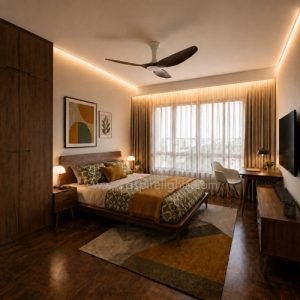
A slim coveless profile is better suited to homeowners who want indirect lighting without introducing a large decorative cornice. Its smaller visual footprint creates a lighter and more discreet ceiling detail. The focus stays on the glow of the light rather than on the aluminium profile itself. This style works well for:
- bedrooms
- study areas
- TV walls
- curtain-side lighting
- smaller rooms
- selected sections of a wall rather than the entire perimeter
It is particularly suitable for minimalist interiors where homeowners want the coveless lighting to blend quietly into the architecture. For this type of application, the Arclux-Axis Slim Coveless Cove Light provides a more understated alternative to a larger cornice-style profile.
4. Trimless or Plaster-Finish Coveless Profile
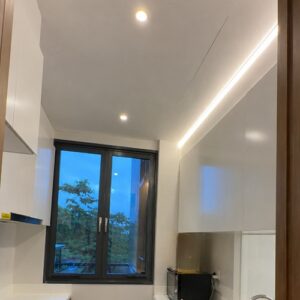
It is not a standard surface-mounted decorative profile. Instead, it is designed to be blended more tightly into the wall finish so the final result looks more seamless after plastering, putty work and paint. This type can look very clean when done well. But homeowners should understand one important point: it requires better workmanship. To make this profile look neat and seamless, the contractor usually needs to manage:
- proper alignment
- straight finishing lines
- plaster or putty work
- skim coating
- paint finishing
- crack control over time
If workmanship is poor, the edges may look uneven or visibly patched. So while the finished look can be attractive, it is less forgiving than a straightforward surface-mounted profile. This type is better suited for homeowners who:
- are doing full renovation works
- want a more built-in look
- have a contractor with strong finishing skills
- accept the extra labour involved
Should You Use COB LED Strip for coveless light aluminium profile?
Yes. For coveless lighting, homeowners usually want the light to look smooth and refined. COB LED strip is often preferred because it creates a more continuous-looking line of light and reduces visible spotting.
But the final result still depends on:
- the profile design
- the viewing angle
- the light direction
- the diffuser or cover design
- the installation workmanship
The best approach is to choose the profile and LED strip as one complete system, not as two separate decisions.
What Should Homeowners Plan Before Installation?
This is where many problems start. Coveless cove lighting should be planned before electrical and finishing works are finalised.
Where will the driver go?
The LED driver should be placed somewhere accessible for future replacement. Common options include a nearby cabinet or another agreed serviceable location.
Where does the wiring start and end?
The electrical point must match the profile layout. This should be discussed before installation begins.
How will corners be handled?
Corners are highly visible. Ask how the inner and outer corner transitions will be finished.
What light direction do you want?
Do you want a soft ceiling glow or a wall-wash effect? Decide this early because installation orientation matters.
Do you want full-room perimeter lighting or selected feature areas?
Not every room needs cove lighting on every side. In some homes, selective placement gives a cleaner result.
Final Thoughts
A Surface Mounted Cove Light Profile is a practical solution for homeowners who want a modern cove-light effect without the bulk of a traditional false ceiling cove.
The main advantages are clear:
- cleaner ceiling lines
- softer indirect light
- less bulky ceiling treatment
- a more modern architectural look
But the final result depends on more than the profile alone. You still need to plan the LED strip, driver location, wiring route, corner finishing and installation quality properly.
If you are deciding between false-ceiling cove lighting and coveless cove lighting, the best question is not which one is more popular. The better question is: which system suits your ceiling design, renovation scope and desired lighting effect more naturally? For many modern homes, coveless cove lighting is the cleaner answer.
FAQ
Do I need a false ceiling to install a Surface Mounted Cove Light Profile?
No. A Surface Mounted Cove Light Profile is designed to create coveless indirect lighting without building a false ceiling. The aluminium profile mounts at the ceiling-wall junction and conceals the LED strip.
If your home already has a false ceiling, or you plan to build one, the LED strip driver can be placed inside it, provided there is suitable access for future servicing or replacement. Otherwise, the driver can be located in an accessible nearby cabinet or another suitable serviceable location.
Can coveless cove light replace my main ceiling light?
It can in some smaller areas, if the LED strip provides sufficient brightness. For most living rooms and bedrooms, coveless cove light works better as an ambient lighting layer rather than the only light source.
If you prefer a minimalist ceiling with fewer lighting fixtures, you can consider a dual-strip coveless profile, such as the Arclux-Double Coveless Cornice Light Aluminium Profile, which accommodates two LED strips for higher light output.
The final brightness still depends on the LED strip output, room size, surface colours and total running length.
Should the light shine up or down?
Shine up is usually better for soft ambient ceiling glow. Shine down is more suitable when you want to highlight a wall finish or feature surface.
Is the trimless plaster-finish aluminium profile type better for coveless cove light?
Not automatically. It can look more seamless, but it also needs better putty and finishing workmanship. A standard surface-mounted profile is often the safer and more practical choice for many homeowners.