
Best Ceiling Fans in Singapore 2026: Top Picks & Buying Tips
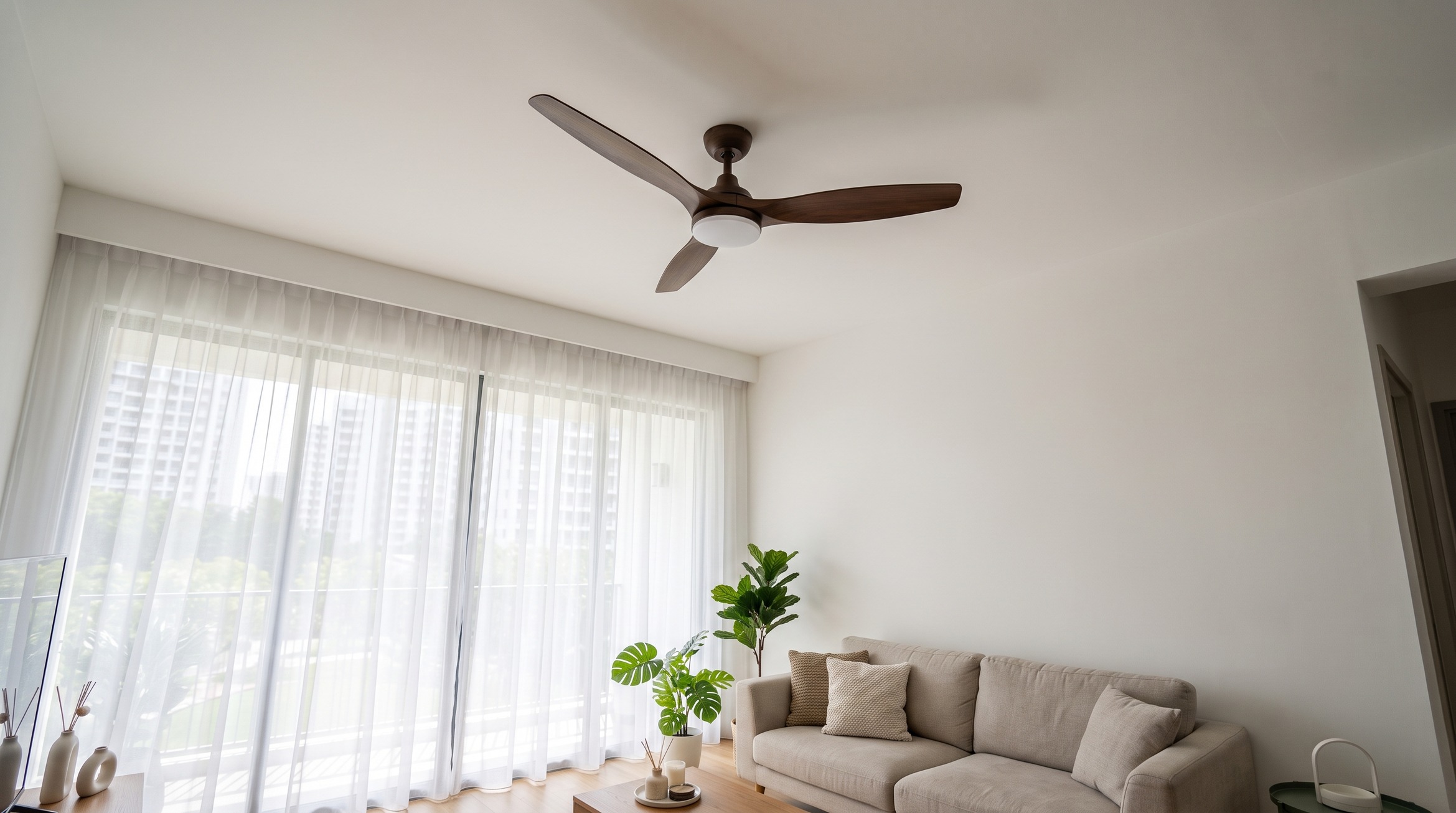
A ceiling fan in Singapore isn’t a seasonal buy. It runs most of the year, often longer hours than the air-con, and that changes how you should judge one.
A fan that’s slightly louder or slightly less efficient isn’t a small annoyance when it’s running twelve hours a day. You’ll hear it every night and pay for it every month.
Here’s what actually matters when choosing.
DC vs AC Motors: The Decision That Matters Most
Why DC Motors Suit Singapore Homes
Most modern DC ceiling fans use a brushless motor that consumes less power and generally runs quieter than a traditional AC motor. They also tend to offer finer speed control, with many models providing five or six speed settings instead of the three speeds commonly found on older AC fans.
The extra speed settings are particularly useful in bedrooms. You can choose a gentler airflow for sleeping instead of having to switch between settings that may feel either too weak or too strong.
DC fans are also much more affordable than they used to be. In Singapore, there are now DC ceiling fans available for under S$200, while higher-priced models may offer stronger performance, better finishes, smart controls, longer warranties or more established brands. Rather than choosing between AC and DC based on price alone, compare the airflow, fan size, noise level, features and after-sales support of the actual models.
DC fans are also much more affordable than they used to be. In Singapore, homeowners can now find DC ceiling fans for under $200, although prices vary depending on the brand, fan size, performance, design, smart features and warranty.
Aspire Lightings carries only DC motor ceiling fans. All our fan models are eligible for Climate Vouchers under the Climate Friendly Households Programme, which includes DC fans as an energy-efficient product category.
Corner Fans, Hugger Fans and Standard Designs
Corner Fans for Small or Awkward Rooms
Corner fans mount into a corner rather than the ceiling centre, which makes them work in small HDB bedrooms, kitchens and study rooms with no clear ceiling space.
The Acorn DC360 is a 16″ corner fan with 360-degree oscillation, six speeds and a timer — useful in a kitchen where you want air moving around rather than straight down. The Alaska Eskye 15″ oscillates 110 degrees and stands 57cm tall, with wood blades if you want a warmer aesthetics.
For really tight spaces, the Alaska Swish 13″ uses an energy-efficient DC motor and works well for ceiling heights up to about 3m — suitable for most HDB flats and condominiums, including homes with a false ceiling.
Hugger Fans for Low Ceilings
Hugger fans are mounted close to the ceiling without a downrod, making them suitable for homes where ceiling clearance is limited. They are especially useful in HDB flats and condominiums with lower ceilings or false ceilings, where a downrod fan may hang too low.
The Point One Gust Hugger Fan has a low-profile height of only 22cm and is available in 38″, 43″ and 52″ sizes. Its compact profile makes it a practical option for bedrooms, living rooms and other spaces where you want to keep the fan as close to the ceiling as possible.
Standard Downrod Fans
These hang from a downrod and suit standard or higher ceilings with open floor space. You get the widest choice of sizes and designs here, including models with a light kit built in.
The Youkain Optimum 668 is a good example of what a current DC fan offers: 46″ or 52″, six speeds, forward and reverse, and a 24W tri-tone LED that dims. Tri-tone means you can switch between warm, neutral and daylight rather than being stuck with one colour.
The Bestar Razor comes in 46″ and 54″ with a slim DC motor, six speeds plus reverse, and a 24W LED with day, cool and warm settings.
How to Size a Ceiling Fan for Your Room
Fan size should match the room size, but blade span is not the only factor. Motor performance and blade design also affect how well the fan moves air.
As a practical guide:
- 46″ fan: better suited for rooms up to about 20 square metres
- 54″ fan: better suited for rooms up to about 25 square metres
- 13″ to 16″ corner fan: useful for kitchens, compact bedrooms or other spaces where a full-size ceiling fan may not fit
Two common mistakes are choosing a fan that is too small or too large for the room.
If the fan is too small: The airflow may not reach the whole room, so you may need to run the fan at a higher speed while some areas still receive little air movement.
If the fan is too large: There may not be enough clearance around the fan for air to circulate properly, especially if the blades are too close to walls or other obstructions. It may also look out of proportion with the room.
What to Check Before Choosing a Ceiling Fan
Ceiling height and type. Measure the ceiling height before choosing the fan. Installation on a concrete ceiling is generally more straightforward, while a false ceiling requires proper reinforcement to support the fan and usually costs more to install. For ceilings above about 3m, a downrod fan is usually the better choice because the rod can be extended more easily to bring the fan to a suitable height. Hugger fans do not come with a downrod, and adding one above the fan can make the overall installation look less neat.
Existing light point. If there’s already a light point where you want the fan, installation is straightforward. Adding or relocating a point is a separate electrical job, so worth confirming before you commit to a position.
Wind sound. For bedrooms, compare the actual wind sound at different speed settings rather than assuming a lower setting will always be quieter. A fan with a higher RPM and stronger airflow may still produce more wind noise on its lower speeds than a lower-RPM fan. If you are sensitive to sound while sleeping, it is worth hearing the fan in operation before buying.
Light kit. A ceiling fan with an integrated LED combines the fan and general room lighting in one fitting. Many models also offer tri-tone lighting so you can switch between different colour temperatures. If the room already has downlights or other ceiling lights, a fan without a light kit may be more practical and can also cost less, depending on the model.
Common Questions About Ceiling Fans in Singapore
Is it worth replacing an old AC ceiling fan with a DC Fan?
Yes, especially if the existing AC fan is old, noisy or used for many hours each day. A DC fan generally uses less electricity, offers more speed settings and gives you better control over the airflow.
What Size Ceiling Fan Is Suitable for an HDB Living Room?
As a general guide, 46″ to 52″ fans suit many newer BTO living rooms, which tend to be more compact. For older HDB flats with larger living rooms, 52″ or bigger may be more suitable.
Room width, furniture layout and clearance from walls or cabinets should still be checked before choosing the final size.
Can I install a ceiling fan myself?
It is best to engage an experienced ceiling fan installer. Prioritise the brand’s own installer where available, as they are usually more familiar with the fan models and can help avoid installation-related warranty issues. For false ceilings, additional electrical work or high ceilings, check that the installer has the right experience before proceeding.
You can shortlist ceiling fans online, but specifications alone do not always tell you how a fan will feel in your home. Two fans with similar specifications can still differ in airflow, wind sound and overall performance. Aspire Lightings is not only a lighting shop in Singapore, but also a ceiling fan shop, with a wide range of ceiling fans on display at our Bendemeer Road showroom. You can compare the size, airflow and wind sound in person before deciding which fan suits your home.
Contact
Aspire Lightings Pte Ltd
994 Bendemeer Road, #01-05 B-Central, Singapore 339943
Phone: +65 6909 0528 | WhatsApp: +65 8685 8188
Website: aspirelights.com
Contact us